Understand the processes.
Question the interpretation.
A practical reading guide to geological hydrogen: from formation mechanisms to detection, preservation and resource uncertainty.
What is geological hydrogen?
Molecular hydrogen (H₂) can occur naturally in rocks and subsurface fluids. “Natural” describes its origin; it does not specify concentration, flow, renewability or environmental performance. Industrially generated hydrogen and deliberate stimulation are separate production pathways.
Gelman, S. E. · 2025 ↗Water–rock reactions & serpentinization
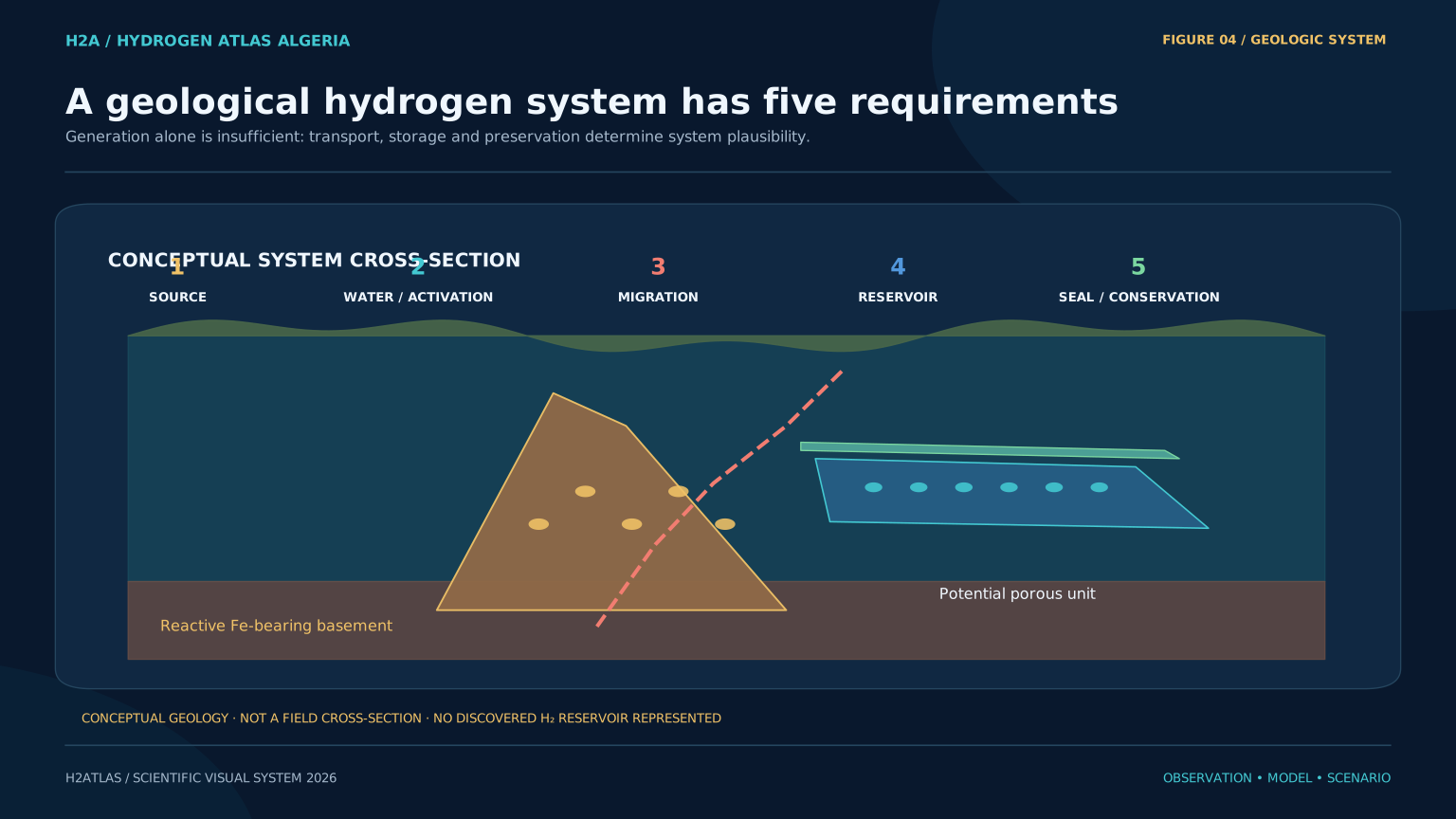
During alteration of suitable iron-bearing minerals, oxidation of ferrous iron can be coupled to water reduction and H₂ generation. Serpentinization is a family of reactions involving ultramafic rocks and water. Mineral composition, accessible reactive surfaces and fluid conditions matter; ultramafic rock alone is not evidence of a hydrogen reservoir.
Ballentine, C. J. · 2025 ↗Iron oxidation is a reaction, not a resource estimate
The redox state and accessibility of iron matter. An iron-rich formation cannot be converted into a hydrogen resource from bulk iron content alone. Reaction pathways, water supply, reaction extent and preservation require independent evaluation.
Ballentine, C. J. · 2025 ↗Radiolysis
Radiation associated with radioactive decay can dissociate water and form hydrogen. Assessing this mechanism requires the radionuclide distribution, water availability and geological residence time. A regional radioactive-rock proxy is not a measured hydrogen generation rate.
Gelman, S. E. · 2025 ↗Other proposed sources
Deep mantle contributions, mechanical rock fracturing and other reactions are discussed in the literature. Their importance varies with setting and remains uncertain. H2A identifies proposed mechanisms separately from locally demonstrated sources.
Zgonnik, V. · 2020 ↗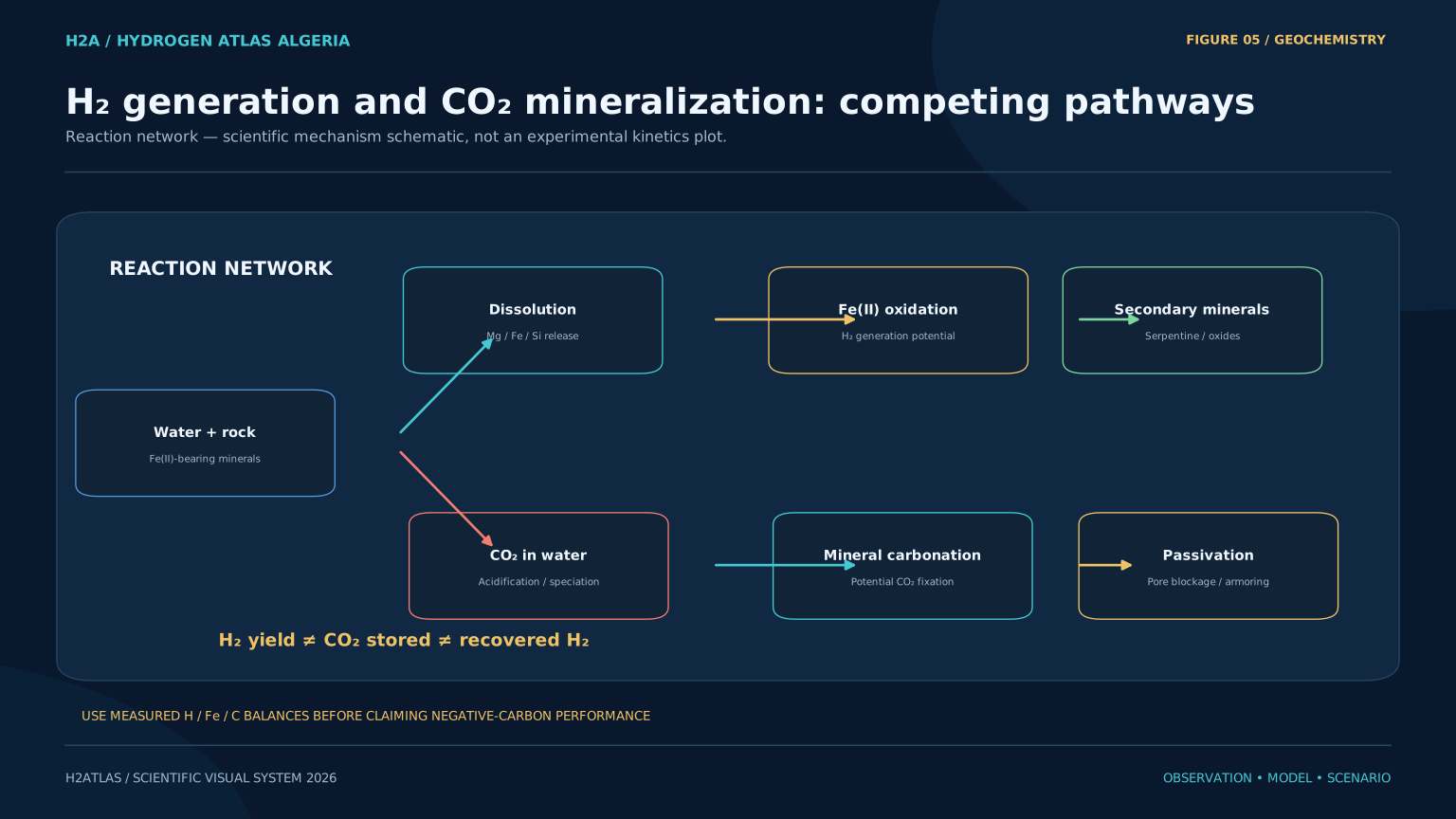
Kinetics & controlling conditions
Temperature, mineralogy, reactive surface area, fluid composition and water access affect reaction progress. Laboratory production under controlled conditions does not directly predict a field production rate. Scaling requires coupled reaction and transport constraints.
Ballentine, C. J. · 2025 ↗Migration & transport
Faults, fractures and connected pores can transport hydrogen. Migration can also move hydrogen away from its source or to the surface. A mapped fault is a structural observation; its permeability, connectivity and role in a hydrogen system must be tested.
Gelman, S. E. · 2025 ↗Reservoir, trap & seal
Porous sedimentary rocks or fractured crystalline rocks may provide storage space. Retention requires appropriate trapping and sealing conditions. The Bourakébougou study illustrates why core, log and geochemical observations must be interpreted together.
Maiga, O. · 2023 ↗Losses & microbial consumption
Generation does not guarantee accumulation. Leakage, dissolution and reactions, including microbial consumption, can remove hydrogen. Preservation must be evaluated together with generation and transport, rather than treated as a default property.
Ballentine, C. J. · 2025 ↗Exploration & detection
Geological mapping, gas surveys, wells and geophysical interpretation provide different evidence. Surface morphology may guide fieldwork but has alternative explanations. Remote-sensing classifications require ground validation and cannot substitute for gas analysis.
Ginzburg, N. · 2025 ↗Sampling & gas analysis
A usable observation records the sampled medium, depth, date, analytical method and concentration units. Contamination, sampling artifacts and detection limits must be assessed. H2A preserves missing metadata rather than substituting assumed values.
Zgonnik, V. · 2020 ↗Isotopes & geochemical context
Gas composition, noble gases and isotopic measurements can constrain fluid history and possible source processes. Interpretations depend on the system and on mixing, reaction and transport. One isotopic signature should not be treated as a unique universal fingerprint.
Holland, G. et al. · 2013 ↗Occurrence, prospectivity, resources & reserves
An occurrence is an observation. Prospectivity is a model-based assessment of geological conditions. A resource estimate requires explicit quantity and uncertainty assumptions. Reserves require a justified economic and technical framework. These terms are not interchangeable.
Gelman, S. E. · 2025 ↗What a prospectivity value means
USGS prospectivity combines modeled geological system components. A value is not a hydrogen concentration, a reserve volume or the probability that a drilled well will succeed. Do not transfer a U.S. classification to Algeria without a separately justified model.
Gelman, S. E. · 2025 ↗Open research questions
Key uncertainties include source rates at field scale, connected migration pathways, microbial losses, long-term preservation and sustained recoverable flow. A low-carbon outcome must be demonstrated with a system-specific life-cycle assessment. Renewability cannot be assumed.
Ballentine, C. J. · 2025 ↗